
Friday, May 05, 2017
[BOOK REVIEW] Indigo by Beverly Jenkins
 Fiction/Historical Fiction/African-American Fiction/Romance
Syma C. reviews INDIGO by Beverly Jenkins (iUniverse, 2000)
After reading Indigo, I had to take a deep breath. I learned so much from this book; lessons I will remember for the rest of my life.
Of course, after slaves were given legal papers proving themselves to be free, there were still people who used them for sport. They were called "slave catchers." There were ex-slaves, such as Hester, whose role in the safety and well-being of runaways who found themselves in need, proved to be vital. Her help was especially vital when she encounters an injured man known as "Black Daniel." African-Americans had little but accomplished much; they even devised methods of communication without mumbling a word. No one can verbally express a warning to readers what Galen and Hester were about to embark upon in this pre-Civil War America.
Knowing the law can not only make trouble for you but also the ones whom you love and care for, blacks learned when to express themselves and when to hold on to emotions. Throughout this book, readers learn not only do all the characters possess a certain strength to protect one another in the present, but also to guard and cherish tragic and beautiful events from the past.
Black Daniel, who was born Galen, is by no stretch of the imagination a dim witted man, passive person, or a slave to cower. Instead, he is a person of morals, trust, affection, dedication, and above all, he has real love for Hester, whom he named, “La Indigo.”
This historical romance explores the truth about love and passion between a man and a woman.
Super awesome book!
Labels: African-American Fiction, Historical Fiction, Readers' Advisory Annotations, Reviews by Syma C., Romance, Staff book reviews

Thursday, March 23, 2017
[Book Review] Death Comes as the End by Agatha Christie

Death Comes as the End by Agatha Christie is set in Ancient Egypt. Reniseneb lives on the west bank of the Nile at Thebes in Egypt about 2000 B.C.
Reniseneb’s family will soon be killed, and because of this, she can trust only two people, Esa, a relative, and her friend, the family's scribe, Hori. It is up to Reniseneb, Esa, and Hori to identify the silent killer by using their wits alone. Reniseneb has suspected the killer might be even someone within her family. Unfortunately, she has no real proof, but she does have Esa’s and Hori’s suspicions and loyalty. These suspicions are keeping Renisene alive.The killer must be exposed, but first Reniseneb must stay alive.
When I initially chose this book I expected a Poirot or Miss Marple mystery and for it to be set in the late 19th century. This story was a pleasant surprise when I discovered the mystery was set in ancient Egypt. Like her other stories, Agatha Christie will have readers wondering to the end who the killer is.
Labels: Historical Fiction, Mystery Fiction, Readers' Advisory Annotations, Reviews by Marilyn, Staff Reviews, Suspense
Tuesday, April 08, 2014
[Book Review] The Blue Orchard by Jackson Taylor

This book is available from our Memphis Library’s Books in a Bag Bookclub Kit and worth a lively discussion.
Labels: Historical Fiction, Reviews by Darletha Matthews, Women's Fiction
Friday, March 30, 2012
[Book Review] BETWEEN SHADES OF GRAY by Ruta Sepetys
 Fiction/Historical
Beth reviews BETWEEN SHADES OF GRAY by Ruta Sepetys (Philomel Books, 2011).
We all know of Anne Frank, but what about others deported from their homes in the worst of times and forced to live in deplorable conditions?
Between Shades of Gray takes us on Lina's journey before, during and after Stalin's deportation of Lithuanians. Lina lives through the worst mankind has to offer and also amazing kindness from unexpected places. The author, Ruta Sepetys, based the book on interviews from actual survivors. This makes the book all the much harder to read and all the much more a necessity to read it.
Beth, Cordova Branch Library
Labels: Historical Fiction, Reviews by Beth, Women's Fiction
Tuesday, December 06, 2011
[Book Review] BAKER TOWERS by Jennifer Haigh
 Fiction/Historical
Andrea reviews BAKER TOWERS by Jennifer Haigh (William Morrow, 2005)
Author’s note: “The mines were not named for Bakerton; Bakerton was named for the mines. This is an important distinction. It explains the order of things."
Set in the 1940’s coal mining region of Pennsylvania, this story centers on the Novak family. Polish father and husband, Stanley, dies from black lung (a condition developed from working in the mines), leaving behind his Italian wife, Rose, with five children to raise single-handedly. As much as the children know they have obligations to take care of Rose as well as each other, all of them are desperate to escape the claustrophobic small town of Bakerton.
Oldest son George joins the war overseas and Dorothy, the next oldest daughter, moves to New York to work in a typing pool and live in an all-girls’ boarding house. Middle son, Sandy, and middle daughter Joyce, are able to get out of the small town by traveling across the country and joining the Air Force, respectively. Lucy, the baby, seems most likely to be the one who will escape the confines of Bakerton as she studies to be a nurse after college. Never mind the dreams the adult children have for themselves and their growing families, obligations to Rose and Bakerton’s townspeople keep luring them back.
Told equally from the points of view of the five children, readers will feel like they are in the story with each of them. Haigh’s writing style romanticizes the 1940’s but also gives readers realistic imagery of the era. Readers will also appreciate the expanding Novak family’s closeness with each other and their fellow townspeople.
This is a well-written novel with beautiful, nostalgic scenery and solid characters. I highly recommend it.
Andrea King, Poplar-White Station Library
Labels: Coming of Age, Historical Fiction, Reviews by Andrea King
Friday, October 28, 2011
[Book Review] SLAMMERKIN by Emma Donoghue
 Fiction/Gay and Lesbian/Historical
Mary Saunders lives in 1750s London. She longs for a more luxurious life with fine ribbons and clothes. At age 14, she rejects her mother's suggestion to become a seamstress and a tragic mistake leads her into prostitution. She attempts to change her lifestyle when an illness forces her into the hospital. Mary flees to the tiny hamlet where her family is originally from and finds work as a maid and seamstress. While there, she also finds violence and what it means to live as a woman during that time period.
The title Slammerkin comes from an 18th-century term meaning “a loose gown” or “loose woman.” Based on a true story, life in 1750s London is hard to live, unless you are wealthy. The author really spells this out. You feel like you are living with Mary Saunders. The detail in her book is amazing and well-researched. It is also extremely graphic, both in its sexuality and in its violence. Depressing at times, the book can be hard to read and hard to put out of your mind. But it is worth reading just for the detail that is presented in the book.
Suggested website: http://www.emmadonoghue.com/writings
Christina Barnes, Business and Sciences Department
Labels: Gay and Lesbian Fiction, Historical Fiction, Reviews by Christina Barnes
Thursday, October 20, 2011
[Book Review] SARAH'S KEY by Tatiana de Rosnay
 Fiction/Historical
The story traces the effects of the Holocaust on the lives of families in 21st century Paris. There is a reason this book has been a favorite among book clubs for months. If you read it, you will not forget it.
Kay Mills Due, Public Services
*Compare Kay's thoughts on Sarah's Key with a previous review from Sarah Frierson.
Labels: Historical Fiction, Reviews by Kay Due
Thursday, August 04, 2011
[Book Review] THE HELP by Kathryn Stockett
 Have you made plans to see the film adaptation of THE HELP? Have you read the novel? Refresh your memory with details from the following review submitted by Alberta Bell.
Kathryn Stockett, author of The Help, grew up in Jackson, Mississippi and used various sources (stories from her family and her family’s beloved black maid, her friends, other authors, and news media) to shape her fictional characters and their secretive part in stopping an unthinkable and unjust initiative on the black maids in Jackson, Mississippi during the turbulent Civil Rights Movement. Kathryn Stockett magnificently brings the reader into the lives of all the characters, why they are the way they are, and the racial lines that have existed between blacks and whites for generations.
Labels: Historical Fiction, Reviews by Alberta Bell
Wednesday, June 22, 2011
[Book Review] WATER FOR ELEPHANTS by Sara Gruen
 Fiction/Historical
Nancy reviews WATER FOR ELEPHANTS by Sara Gruen (Algonquin Books, 2006)
Everything about Water for Elephants, except the ending, is so on point that even readers not of the Great Depression should find this story believable. A plausible tale wouldn’t be enough in itself, however, to inspire readers. Excellent historical fiction must also use its factual base to entertain and provoke thought, which Sara Gruen nails in her bestselling novel.
Without giving up too much of the plot, the book is about ninety-something-year-old Jacob Jankowski who waits 70 years to reveal his experiences with Benzini Brothers Most Spectacular Show on Earth. He’d barely reached manhood when his parents’ simultaneous deaths produced the instant poverty that led him to hop a train for circus life after dropping out of vet school in his senior year.
All that follows forms a mesmerizing adventure that’s hard to put down. Eye strain was all that prevented my reading it from cover to cover in one sitting. For starters, the characters are unforgettable. They include Marlena, the star equestrian act and Jacob’s future wife; Marlena’s first husband, the handsome and charismatic circus boss who is unspeakably cruel at times; Rosie the elephant whose lemonade transgressions made me laugh out loud; a menagerie of other exotic animals; and a sad array of human freaks.
Jacob’s account of that desperate time in his life (spanning nearly seven years) is engrossing for the sights the reader easily visualizes and the sounds and smells of the big top that couldn’t seem more real. It’s also a commentary on the impact of circuses on Depression-era rubes, slang for gullible patrons. The circus vocabulary in general is an education for wordsmiths, the origin of “roustabout” being the most enlightening for me.
Overall the story is so wonderful that naysaying the final chapter feels almost mean-spirited. For liability reasons alone, nothing about the closing could happen in real life. While mildly disappointing, all is forgiven. This fascinating book has me understanding more about my deceased grandparents and my surviving mother, born in 1929, whose lives were forever changed by the Depression. My altered perception of them is one of the gifts of this story.
Nancy Campbell, LINC Department
Labels: Historical Fiction, Reviews by Nancy Campbell
Thursday, December 16, 2010
[Book Review] THE GUERNSEY LITERARY AND POTATO PEEL PIE SOCIETY by Mary Ann Shaffer and Annie Barrows
 Fiction/Historical
Hollye of the Parkway Village Library Book Club reviews THE GUERNSEY LITERARY AND POTATO PEEL PIE SOCIETY by Mary Ann Shaffer and Annie Barrows (Dial Press, 2008)
This story starts in 1946 London, where author Juliet Ashton receives a letter from a man in the town of Guernsey. He loves Juliet’s books and the journalism stories she writes under the name Izzy Bickerstaff. He goes on to tell about how The Guernsey Literary and Potato Peel Society was started in Guernsey, as the Germans invaded his town. He gets all of his friends and neighbors in Guernsey to write her stories about their town and families during German occupation. Juliet soon falls in love with all the people writing her, and travels to meet them so that she can write a book about their lives.
I absolutely loved the characters in this book. They told the good and the bad of living under German occupation. This book is written entirely in letter content, which was hard to get used to in the first 20 pages or so, but once you get to know the characters and their stories, you forget the format and enjoy the tales that unfold.
I laughed and cried while reading this book. Many of the Parkway Village Book Club members felt the same way. Most of us loved this book. There were a few members who did not like how the book was a collection of written letters, and they could not finish reading it. We learned that Mary Ann Shaffer died in 2008, right after learning that her book was very popular and was going to be printed in many languages throughout the world. Her co-author niece continues to write.
Hollye Ferguson, Parkway Village Library Book Club
The Parkway Village Book Club will discuss The Devil in the White City by Erik Larson on January 19, 2011 at 2:00p.m.
Labels: Book Club Reviews, Book Clubs, Historical Fiction, Reviews by Hollye Ferguson
Thursday, September 16, 2010
[Book Review] SARAH’S KEY by Tatiana de Rosnay

Julia Jarmond, an American transplant and journalist, begins researching the 1942 roundups of Parisian Jews. She discovers the story of Sarah Starzynski and her family and takes the reader along as she digs deeper into the history of Sarah’s family, the history of her own family and the shameful history of a city under siege.
Sarah Frierson, History Department
Labels: Historical Fiction, Reviews by Sarah Frierson
Tuesday, June 22, 2010
[Book Review] CITY OF THIEVES by David Benioff
 Fiction /Historical
Sarah Frierson reviews CITY OF THIEVES by David Benioff (Viking, 2008)
Lev and Kolya have both been captured for capital offenses in the besieged city of Leningrad during World War II. Rather than face their executions, they can win back their lives if they can accomplish one simple task for a Russian general—bring him a dozen eggs for his daughter’s wedding cake. Did I mention that they were in Leningrad during the war? Not such a simple task, really.
This book is at times brutal and yet, at other times, deeply humorous—a coming of age story set within a war story. Benioff’s experience as a screenwriter is apparent, and a movie will take shape in your mind as you read it.
Sarah Frierson, History Department
Labels: Historical Fiction, Reviews by Sarah Frierson
Thursday, March 11, 2010
[Book Review] WENCH by Dolen Perkins-Valdez

Fiction/African-American Historical
Darletha Matthews reviews WENCH by Dolen Perkins-Valdez (Amistad, 2010)
This story takes place in the early 1840s and 1850s.
Tawawa House is a resort located in the free state of Ohio, where Northern and Southern whites spend summer vacation. Four slave women--Lizzie, Mawu, Rennie, and Sweet--accompany their respective masters each summer to the resort. They reside in private cottages with their masters, away from the disapproving eyes of Northern guests in the main hotel. The wives stay at home. The resort is located in an area surrounded by anti-slavery residents, but the Southern men are confident that their slaves will not run away.
Lizzie, Mawu, Rennie, and Sweet look forward to reuniting each summer at Tawawa, where they find reprieve from the plantation's confinement. They explore the area between work duties and share stories about their lives and families. Each woman has endured some form of abuse and heartbreak because, as slaves, they have no control over their bodies or the fates of their loved ones.
Mawu is the newest and most outspoken woman in the group. Suffering endless abuse, Mawu resents "being made to feel no different than a cow or a goat or a chicken." The other women don't discuss being slaves but Mawu's questions force them confront their feelings.
Lizzie has mixed feelings for her master, Drayle. She feels she should hate him because she is a slave, but Drayle has favored Lizzie since she was young. Lizzie is allowed to read and speak freely in his presence, hoping that in her submission, he will one day free the son and daughter she has given him. When Mawu tries to persuade the others to escape, dire consequences follow.
Slavery is known as the “Peculiar Institution” and this novel depicts the complexities of male-master/female-slave relationships. Through Mawu and Lizzie, Wench explores the extremes of these forced relationships on a slave woman’s psyche. This novel is filled with shocking and redeeming moments, all described in simple, elegant language. I recommend it to fans of African-American historical fiction.
Darletha Matthews, South Branch Library
Labels: African-American Fiction, Historical Fiction, Reviews by Darletha Matthews
Monday, March 03, 2008
[Book Review] THIRTEEN MOONS by Charles Frazier
 Fiction/Historical
Robert Cruthirds reviews THIRTEEN MOONS by Charles Frazier (Random House, 2006)
This is the second novel by North Carolina native Charles Frazier, who won the National Book Award in 1997 for Cold Mountain. Most of the story takes place in the hills of western North Carolina. We now know this area as the Great Smoky Mountains, but in the 1820s it was the frontier between the Cherokee Nation and an expanding American republic. Will Cooper is the fictional hero of Thirteen Moons, and through his character Frazier relates the ultimately futile struggle of the Cherokee to remain in their native lands.
Will first encounters the Cherokee when he meets Featherstone and Claire while on a journey to the remote trading post that he has been assigned to run. Soon after arriving at the post he meets Bear, a Cherokee chief who eventually adopts Will. As the area becomes more populated, business at the trading post grows, and Will eventually becomes its owner. Profits from the post and other business ventures provide Will with the capital to acquire huge tracts of land in the surrounding area.
Much of the story concerns Will’s journeys, mostly on horseback, but also include his first train ride while traveling to Washington, D.C. While on a trip to visit Claire in Indian Territory (present-day Oklahoma), Will spends a week in Memphis, and Frazier includes a short, but interesting, description of the city in the 1850s.
Frazier is a master storyteller, and he describes many interesting people and places in Thirteen Moons. I recommend this book for those interested in early American history, in particular the Cherokee removal, commonly known as the Trail of Tears.
Robert Cruthirds, Randolph Branch Library
Labels: Historical Fiction, Reviews by Robert Cruthirds
Wednesday, December 19, 2007
[Book Review] JERUSALEM VIGIL by Bodie and Brock Thoene
 Fiction/Historical
Robert Cruthirds reviews JERUSALEM VIGIL by Bodie and Brock Thoene (Viking, 2000)
This is the first book in a series that chronicles the birth of the modern state of Israel in 1948. It covers the first five days after Israel was declared a sovereign state on May 14, 1948. This was a period filled with uncertainty after British soldiers left Palestine. Although most of the Jews and Arabs in Palestine resent the British, the British military presence maintained a semblance of peace and order. Now things are about to change.
Jewish forces under the Haganah are preparing to defend their section of the old city of Jerusalem from Muslim attackers. Both sides are anticipating reinforcements soon, but the Jewish situation is much more desperate due to a lack of food and water. The Muslim forces are hoping to deliver a knockout blow before the Jews are resupplied. Meanwhile, an Israeli military caravan from Tel Aviv is desperately trying to reach Jerusalem.
The Thoenes have produced a well-researched work of historical fiction. Many of the Jewish characters are Holocaust survivors from Eastern Europe, hoping for a fresh start in an independent Israel. The youngest two Muslim characters are brothers who save the life of a Jewish boy. Many verses from the Bible are included, and some of the characters experience a spiritual transformation in the midst of all the suffering.
Robert Cruthirds, Randolph Branch Library
Labels: Historical Fiction, Inspirational Fiction, Reviews by Robert Cruthirds
Tuesday, November 06, 2007
[Book Review] SILVER PIGS by Lindsey Davis
Jesse Pool reviews SILVER PIGS by Lindsey Davis (Crown Publishers, 1989)
Silver Pigs is the first novel in Marcus Didius Falco mystery series. Generally, I'm not much a of mystery reader, but a customer who shares a passion for some of my favorite authors recommended the series to me, so I thought I'd give this book a try.
This is a hard-boiled detective story with a twist. Falco is a private informer in ancient Rome. He's 30-years old. He rents a one room apartment which doubles as his office on the 6th floor of an apartment building, which is bad for business since anyone who might want to use his services would have to climb six flights of stairs to see if he's in. When he's late with the rent, which is fairly often, he can expect a visit from gladiators who are employed by his landlord as collection men. In addition to the gladiators, he has to be on the look out for his mother, who is constantly tidying up his room and running off any flute girls he may bring home for the evening.
Falco's luck changes one afternoon when a gorgeous young lady of 16 runs into him at the Temple of Jupiter. It goes from "bad" to "worse". The girl is the daughter of a senator and she is being chased by four thugs who had recently kidnapped her.
Her name is Sosia Camillina, and she confides in him that there is a plot to overthrow the emperor Vespasian being paid for with stolen silver smuggled in to Rome from Britain. The silver is in the form of ingots, or "silver pigs" as they are called. It is illegal for anyone other than the government to own one, so when one comes into Falco's possession, he has to be careful about where to hide it until he can be certain of who he can trust in the government in order to turn it in.
Falco is ready to walk away from the case, but when Sosia Camillina is murdered and it looks as if no one will answer for it, he feels compelled to see the case through, even though it means going to Britain. Falco has been to Britain once before, as a young soldier, and hated every damp, cold minute of it. To make matters worse, in order to find out about the scheme, he must endure the wicked tongue of Sosia's beloved cousin Helena Justina as well as work undercover as a slave for several months in the silver mines.
When he has gathered enough evidence of the plot, Falco accompanies Helena Justina back to Rome. The pair must be careful to avoid getting killed by the conspirators they are trying to unmask while they try to discover who murdered Sosia Camillina.
In addition, romantic tension between Falco and Helena Justina has developed over the long trip home from Britain, which troubles Falco because of their difference in social station.
I'm looking forward to reading the rest of this series. Davis paints a vivid picture of ancient Rome and ancient Britain while giving the reader an action-packed mystery full of developed characters, romance, intrigue, and even a chase scene on chariots.
Jesse Pool, Highland Branch Library
Labels: Historical Fiction, Mystery, Reviews by Jesse Pool
Wednesday, June 06, 2007
[Book Review] THE HISTORIAN by Elizabeth Kostova
 Fiction/Horror
Sarah Frierson reviews THE HISTORIAN by Elizabeth Kostova (Little, Brown and Co., 2005)
I love historical fiction. A friend who knew about my affinity suggested that I read this book. And since he mentioned that vampires were a central theme—not a normal reading subject for me—I began this book with some trepidation. But, almost immediately, I was drawn in by Kostova's storytelling.
Using Bram Stoker's Dracula as a springboard, Kostova offers a sprawling tale filled with people and places, all of which play a part in the mystery of what became of Vlad the Impaler, the historical Dracula. The story begins in Amsterdam in 1972 with a young girl's discovery of her father's search for Dracula. Eventually, through letters, the story is actually told by three separate narrators from three different eras. The reader is carried along with each narrator to vividly described locations—including Romania, Bulgaria, Turkey and France—and offered the complex histories that accompany each location along the way.
Much like The Da Vinci Code, this novel asks that the reader suspend a bit of disbelief in exchange for a thrilling ride, but Kostova's thorough research makes that very easy to do. She succeeds at creating a number of smaller mysteries to accompany the one big question—"Is Dracula real?" And those smaller mysteries are just as enticing.
Sarah Frierson, Business and Sciences Department
Labels: Historical Fiction, Horror, Reviews by Sarah Frierson
Monday, April 23, 2007
[Book Review] EMMA BROWN by Clare Boylan
 Fiction/Historical
Fay reviews EMMA BROWN by Clare Boylan and Charlotte Bronte (Viking, 2003)
When Charlotte Bronte died in 1855, she left a 20-page manuscript. Irish novelist Clare Boylan has used that manuscript as the first two chapters of her own novel. Emma Brown is the story of a young, apparently wealthy, young girl who is abandoned at a boarding school in England. From the start it is apparent that Matilda Fitzgibbon, as she is known to the school, is no ordinary girl. She is secretive, prone to fainting spells and claims to have no memory of her past. When the mysterious gentleman who left her at the school with a trunkful of expensive clothing fails to return, Matilda is reduced to servant status and eventually is befriended by Isabel Chalfont, a childless widow. In an effort to solve the mystery of Matilda’s past, Mrs. Chalfont enlists the services of her enigmatic friend, Mr. Ellin. Matilda, who discovers that her true name is Emma Brown, pursues her past through the seamy streets of London where she barely manages to stay alive while facing such horrors as homelessness, the work house and child prostitution.
It will never be known if this is the novel Charlotte Bronte had in mind when she began her manuscript, but it is certainly a very appealing and satisfying story. All of the characters are multi-faceted and fascinating. You care what happens to them. The fact that the audio version is read by Donada Peters is icing on the cake. Ms. Peters is a consummate reader who could, as they say, make the phone book exciting. In Emma Brown she has a story worthy of her vast talent.
Fay, East Shelby Branch Library
Check our catalog for the audio version (CD) of EMMA BROWN
Labels: Historical Fiction, Reviews by Fay
Thursday, December 28, 2006
[Book Review] A GREAT AND TERRIBLE BEAUTY by Libba Bray
 Fiction/Young Adult
Beth reviews A GREAT AND TERRIBLE BEAUTY by Libba Bray (Delacorte, 2003)
Remember back to when you were sixteen? The fights with your parents? Feeling like no one understood you? Now imagine that one of those fights with your mother ends with you saying "I don’t care if you come home at all." And then, to avoid being murdered, your mother commits suicide before your very eyes.
That’s exactly what happens to Gemma while in India. She is quickly sent home to England and enrolled at London’s Spence School, a girls’ academy that turns out “charming young ladies.” Gemma is immediately snubbed by the powerful Felicity, beautiful Pippa and even by her own doughy, plain roommate Ann. However Gemma, not unlike many other Victorian ladies, uses blackmail to gain entry into the exclusive clique for Ann and herself.
Gemma has a secret. When she saw her mother’s death, it wasn’t exactly an eyewitness account; Gemma has visions. Kartik, a young man from India, follows Gemma to London and warns her to fight off the visions. Nevertheless, the visions continue and one night Gemma follows what appears to be a young child into a cave where the diary of a Spence girl is hidden. The diary of Mary Dodd reveals the secrets of a mystical order with knowledge of the “realms” and of visions like Gemma's.
Gemma shares the diary and the secret of her visions with her new friends. They follow Gemma into the realms and are delighted with what they find. Ann can become beautiful, Pippa has a loving knight, Felicity a strong female influence. And Gemma? She finds her mother. But the tastes of their power and the fulfillment of their wishes—never to exist in their Victorian world—change the girls. How can one taste such greatness one minute and lose it the next?
Gemma knows she is the link between this world and the realms. It is now up to her to rebuild the Order and find out what really happened to Mary Dodd. Where good exists, so does evil.
Beth, Highland Branch Library
Labels: Historical Fiction, Reviews by Beth, Young Adult
Thursday, December 14, 2006
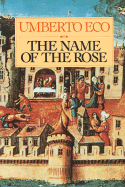
[Book Review] THE NAME OF THE ROSE by Umberto Eco
 Fiction/Mystery Historical
Jason Ezell reviews THE NAME OF THE ROSE by Umberto Eco (Harcourt Brace Jovanovich, 1983):
The young Brother Adso of Melk recounts the events that took place when he was assigned to assist the peculiar but well-respected Brother William of Baskerville in the politically charged task of ferreting out heresy in the monastic orders of the day. The two arrive at a small Italian abbey with a reputation for its wealth in relics and manuscripts. In a few days' time, the abbey becomes the site of a tense debate over the role of poverty in monastic life. Brother William's sharp detection skills become invaluble when the bodies of dead monks begin to appear on a daily basis, apparently following a pattern of apocalyptic prophecy. Adso and William find themselves lost in a community where secrecy and enlightenment, superstition and reason, church and state, and power and compassion become desperately confused. The abbey becomes a microcosm of the very rifts that threaten to tear Christendom--and civilization itself--apart, and at the very heart of this strained social fabric is a fanatically guarded library full of mirrors, trick doors, ghosts, demonic visions, forbidden books, and the key to the deaths that lie like a humorless darkness over the entire monastery grounds.
Set during a week in 1327, Eco's novels finds in the fusion of ecclesiastic history and mystery a chance to explore some of the most fundamental issues of any period of taxing social change. It also explores the importance of symbols and logical debate. The stylistic strength of the book is the resultant combination of rich descriptive detail (especially when it comes to the art and architecture of the Medieval Church) and philosophy (as seen in the impassioned debates over heresy). Although obviously literary, The Name of the Rose benefits from being a mystery novel, using intrigue, adventure, carefully executed pacing, and suspense to propel the story forward. A careful balance is struck between the honest depiction of complexity and the human desire to make things make sense. And politics--simply understood as the social use of power--is exposed as all-pervasive in that balancing process. The book has an incredibly broad appeal, being a highly respected canonical work at the same time as it is an international bestseller.
Jason Ezell, Humanities Department
Labels: Historical Fiction, Mystery, Reviews by Jason Ezell


