
Monday, January 04, 2016
[Book Review] The Wright Brothers by David McCullough

Philip Williams, Cordova Library
Labels: Biography, History, Nonfiction, Reviews by Philip Williams, Staff book reviews

Thursday, May 21, 2015
[Book Review] Thirteen Soldiers by John McCain and Mark Salter

Philip Williams, Cordova Library
Labels: Biography, History, Military, Nonfiction, Reviews by Philip Williams, Staff book reviews
Monday, June 30, 2014
[Book Review] TEN GREEN BOTTLES by Vivian Jeanette Kaplan

The Jews of Austria were loyal Austrian citizens. Their freedoms, loyalty, and culture were gradually destroyed when the Nazi Party increased its political presence and power in Austria. The final destruction came when Hitler annexed Austria in 1938. The Karpel family is trapped like many other Jewish families with no place to go; the world has closed their borders to Jewish immigrants. In Ten Green Bottles, Vivian Jeanette Kaplan recounts her family’s struggle for survival in the midst of the horror.
The Karpel family endures hardships in Austria until 1939, when they escape to Shanghai. Between 1937 and 1939, numbers of Jews escape from Austria to Shanghai. The family arrived on one of the last ships carrying Jewish refugees to Shanghai--a new world. Shanghai presents a mixture of many cultures – American, British, and Jewish – which had adapted to their cultures to Chinese culture.
Safety did not remain with the family for long because World War II breaks out and the Japanese invade Shanghai. The struggle to survive begins again amidst the starvation, American bombings, and the terrifying sounds of Chinese being tortured by the Japanese. In the midst of all this horror the Jews are made prisoners in a Shanghai ghetto.
Ten Green Bottles is told in the voice of Nini, the author’s mother. Through her eyes you can see the journey into horror and despair as the Jews are made non-citizens by the Nazis in Austria only to face more struggles in Shanghai. I would encourage anyone to read this book of courage.
Marilyn, Central Library
Labels: Biography, Nonfiction, Reviews by Marilyn Umfress
Wednesday, November 06, 2013
[Book Review] Growing Up with My Grandfather by Clifton Truman Daniel

Marilyn reviews GROWING UP WITH MY GRANDFATHER: MEMORIES OF HARRY S. TRUMAN by Clifton Truman Daniel (Carol Pub. Group, 1995)
Growing Up with My Grandfather is a powerful biography of Clifton Truman Daniel, who lived his young childhood in the shadow of his grandparents, President Harry S. Truman and Bessie Truman. Clifton Truman Daniel tells several family stories of his visits with the Trumans. His grandparents' house was the scene of many childhood adventures and wonderful memories.
My favorite is the story is one about Clifton and marbles. When Clifton was three or four, he discovered marbles that Bessie Truman had hidden in the dining room. He created his own game at the Truman house in Independence, Missouri. At the house was an ancient heating system. The entrance hall heating duct was the target of the game. The game was to take a hand full of marbles from the dining room, go around the corner to the entrance hall heating duct, and let them fall into the heating system. Clifton had a wonderful time listening to the marbles clang against the tin wall of the duct until he had to stop.
I enjoyed the family stories and also found the book a very interesting read on President Truman's family and the effects of fame and power on a family. Clifton Truman Daniel's book also allows the reader to feel what life is like in the shadow of a prominent famous person. I gained some insight from this book into the lives of children of the politically famous.
Marilyn Umfress, Central Library
Labels: Biography, Nonfiction, Reviews by Marilyn Umfress
Wednesday, May 15, 2013
[Book Review] Inside the Mind of BTK by John Douglas and Johnny Dodd

Marilyn reviews INSIDE THE MIND OF BTK:THE TRUE STORY BEHIND THIRTY YEARS OF HUNTING FOR THE WICHITA SERIAL KILLER by John Douglas and Johnny Dodd (Wiley & Sons, 2007)
How do you catch a shadow?
For thirty years the BTK killer (Bind, Torture, Kill) eluded capture, killing between 1974 and 1991. To John Douglas of the FBI and the police of Wichita, Kansas, BTK was a shadow: appearing, disappearing, and killing at will.
BTK, real name John Rader, was one of the most hunted serial killers of the 1970s. BTK also was a criminal who taunted police between 2000 and 2005 with letters and pictures of his crimes. He was so like a shadow that some of his killings were not credited to him until he claimed credit. John Rader created an image of himself to his family and friends that led to unbelief when he was captured. His true self was hidden in a secret world. The Wichita police had to use 21st century technology to capture him.
Together with Johnny Dodd, Douglas weaves an interesting and fascinating account of the hunt, profiling, and capture of Dennis Rader.
The book is divided into three parts: the hunt, Dennis Rader's life, and an interview done by Douglas. Each part held my attention for it revealed the master mind of a complex criminal.
Marilyn Umfress, Central Library
Labels: Biography, Crime and Criminals, Nonfiction, Reviews by Marilyn Umfress
Monday, March 18, 2013
[Book Review] WAGING HEAVY PEACE by Neil Young

Steve reviews WAGING HEAVY PEACE: A HIPPIE DREAM by Neil Young (Blue Rider Press, 2012).
Neil Young’s autobiography will captivate the reader with anecdotes that span a forty-year career in the music industry. Perhaps even more interesting is the unexpected exploration of Young’s eclectic interests.
One thing is immediately apparent: Young is tireless for a man of his age! From biomass vehicles to train modeling, Young is involved in a dizzying array of creative projects. His humility and dedication to his craft are also underscored throughout the book. One might feel compelled to call Young a Renaissance man; The Leonardo Da Vinci of our age! This book left me questioning my own commitment to crafting a better world.
Steve Shackelford, South Branch Library
Labels: Biography, Memoir, Nonfiction, Reviews by Steve Shackelford
Wednesday, January 19, 2011
[Book Review] THE IMMORTAL LIFE OF HENRIETTA LACKS by Rebecca Skloot
 Nonfiction/Biography
Karen reviews THE IMMORTAL LIFE OF HENRIETTA LACKS by Rebecca Skloot (Crown, 2010)
This non-fiction offering, written by Rebecca Skloot, tells of the origin of the famous HeLa cells which were vital for developing the polio vaccine; uncovered secrets of cancer, viruses, and the effects of the atom bomb; helped lead to important advances like in vitro fertilization, cloning, and gene mapping; and have been bought and sold by the billions.
The recounting of Mrs. Lacks childhood, years as a wife and mother, is packed with stories of living as a Southern tobacco farmer, being sent to live with other family members, "kissin'” cousins, incest, the ordeal of cancer, etc.
Readers will find this a most interesting read.
Karen Hall, North Branch
Labels: Biography, Nonfiction, Reviews by Karen Hall
Monday, June 12, 2006
MOCKINGBIRD by Charles J. Shields
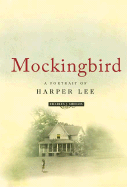 Kam McHugh reviews MOCKINGBIRD: A Portrait of Harper Lee by Charles J. Shields (Henry Holt, 2006).
Harper Lee has always been a difficult target for biographers and fans. Not long after she published her masterpiece, To Kill a Mockingbird, she retired to her hometown of Monroeville, AL, where she has lived ever since. She routinely turns down requests for interviews. Unfortunately for biographer Charles Shields, she proved to be no different this time around. This biography was not created with the assistance of Ms. Lee, who even turned down the author’s requests to verify facts through the mail.
Despite these obstacles Shields has written a fairly thorough biography. There has never been another book about Lee so it is difficult for a reader to compare facts. But Shields manages to write a very readable and convincingly accurate biography mostly based on interviews.
The reader comes away with a fairly good idea of the personality of Lee – her tomboyish upbringing which produced an unusual perspective on life, a quick wit, and strong desire for independence. This book does a lot to break down many of the mysteries of this mythical author and her friends, mainly Truman Capote. Shields’ draws closure to the question of who actually wrote To Kill a Mockingbird, Lee or Capote. He also adds a little more about who was responsible for In Cold Blood, but you’ll have to read this biography to find out.
Kam McHugh, Randolph Branch Library
Labels: Biography
Saturday, June 03, 2006
CLEMENTE by David Maraniss
 Kam McHugh reviews CLEMENTE: The Passion and Grace of Baseball's Last Hero by David Maraniss (Simon & Schuster, 2006).
Roberto Clemente’s name has always been associated with pride, dignity, and excellence on and off the field. David Maraniss’ new biography furthers this conception of Clemente. The book not only chronicles his life – focusing mostly on his baseball years – but it also looks at the times and the man that lived in them. Maraniss does a good job of looking at the social conditions from the eyes of a black Latin baseball player in the 50s and 60s. Particularily interesting are his contrasts between racial conditions in Puerto Rico, Pittsburgh, and Fort Meyers, FL (Pirates’ Spring Training facility).
The author doesn’t paint Clemente as a saint – he is given to moodiness and a quick temper. But he does a good job of portraying the ballplayer’s side of the argument – which was often overlooked by the primarily non-Spanish speaking, white media of the 50s and 60s.
Clemente will be enjoyed by baseball fans, humanitarians and those who love an underdog story.
Kam McHugh, Randolph Branch Library
Labels: Biography


