
Thursday, January 15, 2009
[Book Review] AFTER THE DANCE by Lori Johnson
 Fiction/African-American
Doris Dixon reviews AFTER THE DANCE by Lori Johnson (Dafina Books, 2008)
With her debut novel After The Dance, former Memphian Lori Johnson offers a gift to readers who enjoy well-crafted, character-driven stories about love and intimacy. The smart dialogue and humorous banter will remind some readers of classic Hollywood love stories. Others will appreciate that this is a story about "grown folks" determined not to repeat the mistakes of the past. The language is sharp but never profane and the plot is provocative without being tawdry.
Tired of playing romantic games, Faye creates a series of rules for potential lovers. She is not interested in romantic relationships, wants to avoid emotional entanglements, and refuses to have sex with any man more than three times. Faye's new neighbor, Carl, is intrigued by if not instantly attracted to her. Their brief time together, watching movies, talking, and dancing, convinces him that, despite the obstacles she has created, Faye is someone he wants to know better. Carl accepts her conditions (three strikes and you're out) with the hope that his charms will wear down her defenses.
Doris Dixon, Raleigh Branch Library
Labels: African-American Fiction, Reviews by Doris Dixon

Friday, November 23, 2007
[Book Review] GETTING MOTHER'S BODY by Suzan-Lori Parks
 Fiction/African-American
Doris Dixon reviews GETTING MOTHER'S BODY by Suzan-Lori Parks (Random House, 2003)
It took me some time to finish this review of Suzan-Lori Parks' impressive debut novel. Here's the issue that stumped me: how do I talk about this book in relation to the African-American fiction titles commonly requested at my library? The answer: I can't.
Getting Mother's Body is not urban fiction. Although there is some "drama," this novel, set in the 1960s American Southwest, is more character-driven than many popular titles. It's not inspirational fiction, either. The book opens with a sex scene in which the main character wonders what her lover has done with her panties. This morning, I finally realized that I should focus on the book's universal appeal. It's a story of how characters jostle to overcome bad decisions and hardscrabble circumstances.
Billy Beede is in trouble. Sixteen and pregnant, she's too often motivated by pride, as when she quit her job at the hair salon. Even though the owner admitted that Billy brought in most of the customers, she'd still refused to pay the young woman more money. It's been six years since the death of Billy's mother, Willa Mae. Billy lives with her Uncle Roosevelt and Aunt June, who run a gas station in a small Texas town and are very poor. She sleeps on a mat behind the service counter.
Billy dreams of a new life with the father of her baby. He promises to wed her, but first she must meet his sister, who lives in another town. Billy makes the trip by bus. In the box on her lap sits a beautiful white wedding gown that the teen finagled from the soft-hearted owner of the local dress shop (Billy had learned to run cons from her mother as they traveled the Southwest in a red convertible, a gift from one of Willa Mae's many "husbands"). At her destination, she learns that her lover is already married, but was too much of a coward to tell her himself.
What to do? Billy has always discounted the stories people told about the "treasure" buried with her mother. Hmm? If she can recover the jewels, she'll have enough money to get rid of the baby and start a new life.
Willa Mae is buried hundreds of miles away in Arizona. When Uncle Roosevelt and Aunt June receive a letter stating that the grave site will soon be disturbed to make way for a grocery store, they too decide to claim the treasure. Roosevelt, a former preacher, wants to build a new church and June wants to purchase a prosthetic leg. Billy, Roosevelt and June drive to Arizona in a truck that Billy "borrows" from Willa Mae's last husband, the transgendered Dill Smiles. Dill pursues the trio, vowing to shoot dead anyone who disturbs Willa Mae's grave.
Why did it take so long to write this review? I spent too much time worrying about genres and categories (After reading an earlier version of this review, one coworker said that Getting Mother's Body sounded like "Southern Gothic" to her). For me, the magic of the book lies in its "African-Americanness" (the language, gestures, and situations that seemed familiar) and in its larger project of grappling with what it means to be human. In that way, Parks' novel could be placed within a long trajectory of African-American literature, a tradition that some critics may argue is being eclipsed by some of today's most popular titles.
With humor, compassion and an ear for the musicality of language, Parks gives voice to one-of-a-kind characters. Although Billy Beede is the main character, I found the tragic stories of her uncle and aunt even more compelling. Despite often being disappointed with one another, they treat other with kindness and respect. At different points, Roosevelt and June are motivated by altruism, selfishness, desperation or love. For example, their trip to Arizona is inspired in part by their desire to ensure a proper re-burial for Willa Mae. Well into middle-age, these two people still wrestle with tough questions about how "to be." Sixteen-year-old Billy has two excellent role models.
Doris Dixon, Raleigh Branch Library
Labels: African-American Fiction, Reviews by Doris Dixon
Tuesday, July 24, 2007
[Book Review] THE SNACK THIEF by Andrea Camilleri
 Fiction/Mystery, International
Doris Dixon reviews THE SNACK THIEF by Andrea Camilleri (Viking, 2003)
Two murder investigations distract Inspector Montalbano from his chief passion--devouring the cuisine of his native Sicily. In the first case, a sailor is murdered on a Tunisian trawler that had ventured illegally into Italian waters. In the other, the residents of an apartment building find the corpse of a fellow resident in the building's elevator. The Inspector must deal with hysterical people in both instances: irate, scheming bureaucrats and politicians in the former and disgruntled, meddlesome residents in the latter.
I enjoyed much about this book. In particular, I appreciated the insights the author offers into Sicily's politics and culture and the lives of its Tunisian immigrants. His depictions of the many people who annoy the Inspector are humorous. Other readers will no doubt enjoy Camilleri's lush descriptions of Sicilian cuisine.
The Snack Thief is part of Camillerri's Inspector Montalbano series of mysteries. This is the third title to be translated into English by Stephen Sartarelli.
Doris Dixon, Raleigh Branch Library
Labels: International Fiction, Mystery, Reviews by Doris Dixon
Monday, February 05, 2007
[Book Review] CRAZY FOR YOU by Jennifer Crusie
 Fiction/Romance
Doris Dixon reviews CRAZY FOR YOU by Jennifer Crusie (St. Martin's Press, 1999)
There is something exhilarating about reading a writer at the top of his or her game. I’ve read novels that Jennifer Crusie published before and after 1999’s Crazy For You. This is my favorite. She knew what her readers wanted and gave it to them. According the dust jacket, Crusie analyzed the structure of women’s fiction for her Ph.D. dissertation in literature. This information makes me wonder about the years of study and practice that shaped Crazy for You, a tight, funny, satisfying romance. Here's a quick summary:
Quinn Mackenzie is sick of her life. Sick of teaching art to high schoolers. Sick of her boring, worrisome live-in boyfriend, Bill. He never listens. Things begin to change for the better when Quinn adopts an abandoned dog. Bill calmly orders her to get rid of it. She refuses and he takes the dog to the pound behind her back. After reclaiming her dog and dumping Bill, Quinn makes other changes. She pursues bad boy mechanic Nick, who was once married to her wild sister Zoe. Quinn longs to be wild, too. Nick is just the spark she needs, but Bill refuses to accept that his relationship with Quinn is over.
Doris Dixon, Raleigh Branch Library
Labels: Contemporary Romance, Reviews by Doris Dixon, Romance
Wednesday, January 03, 2007
[Book Review] ORYX AND CRAKE by Margaret Atwood
 Fiction/Science Fiction
Doris Dixon reviews ORYX AND CRAKE by Margaret Atwood (Nan A. Talese, 2003)
Snowman (formerly known as Jimmy) is the last human on earth. He is the caretaker for a group of genetically-spliced "people" who are flawlessly beautiful and extremely naive. In his former life, before the apocalypse engineered by his childhood-friend Crake, Jimmy dated frequently and wrote ad copy. Now, he sleeps in a tree to avoid being eaten by wolvogs (half wolf, half dog). To survive, he scavenges humankind's leftovers for supplies, food, and liquor.
Snowman embarks on a double-adventure to understand his present isolation. He travels to his friend's devastated compound to make sense of the recent catastrophe. At the same time, he remembers his childhood and education, tries to figure out why his mother abandoned the family, and mourns Oryx, his lover. His overland journey is difficult because he has few supplies other than a broken watch, a pair of broken sunglasses and a soiled bed sheet. The circumstances of his lover's death complicate his emotional journey.
Atwood's speculative vision of the future includes the devastating consequences of corporate-funded genetic splicing. But her grim forecast is the backdrop of the novel. At its heart, Oryx and Crake is about Snowman's struggle to understand himself and his relationships with his parents, friends, and lovers.
I love the way Margaret Atwood writes about human relationships. She seems especially adept at capturing the imbalances of power that often exist between people. You may have read Cat's Eye. In the first half of that novel, the narrator recounts how, as a child, she was bullied by another little girl. Atwood's version of that peculiar terror is dead-on.
Websites: oryxandcrake.com
Doris Dixon, Raleigh Branch Library
Labels: Reviews by Doris Dixon, Science Fiction
Friday, October 06, 2006
[Book Review] SIMPLY UNFORGETTABLE by Mary Balogh
 Fiction/Romance
Doris Dixon reviews SIMPLY UNFORGETTABLE by Mary Balogh (Delacorte Press, 2005):
I recommend this book for fans of romance, historical or otherwise--Mary Balogh crafts a satisfying love story that will have you rooting for the inevitable reunion of the two lovers. If you're looking for a new twist on the genre, however, Simply Unforgettable will seem all too predictable.
He's a tall, muscular and impetuous aristocrat. She's a slim, stunning and cautious schoolteacher. They meet during a snowstorm. On a English country road, his carriage passes hers, forcing it into a snowbank. She's outraged. Stranded, she has no choice but to seek refuge with him in a nearby inn. The innkeepers are on holiday and their porter is of little help to the refugees. They make do as best they can--she cooks, he tends the fireplaces. A snowman-building contest and a sensuous waltz melt the ice between the pair and they eventually become lovers. It's a one-night stand. When they return to their respective lives, however, they cannot forget each other. He pursues her despite her protests. Although she loves him, there is a dark secret in her past that convinces her that she would be an unfit wife for a future member of the House of Lords. Also, there's the issue of her career; she enjoys teaching at an all-girls school in Bath, but he thinks she should move to London with him.
Okay, I admit it. I forgot the names of the two lovers. Why look it up on the Internet when their names are largely irrelevant? What matters is that this romance satisfies: independent, intelligent, attractive woman; headstrong, tall, muscular man; believable tension between the two; the inevitable steamy, but not tawdry love scene; personal and social forces threatening to keep the young lovers apart; the eventual reunion. The book is set in Regency England, which is important to the story because he's a member of the ton (London society). Otherwise the novel could have been set elsewhere. In the end, what matters is that Simply Unforgettable delivers.
You might also enjoy Mary Jo Putney's The Marriage Spell, which veers a bit more from genre expectations.
For more information about Regency Romances, see my review of What Price Love? by Stephanie Laurens.
Doris Dixon, Raleigh Branch Library
Labels: Reviews by Doris Dixon, Romance
Wednesday, October 04, 2006
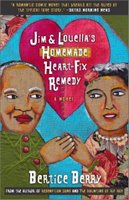
[Book Review] JIM & LOUELLA'S HOMEMADE HEART-FIX REMEDY by Bertice Berry
 Fiction/African-American
Doris Dixon reviews JIM & LOUELLA'S HOMEMADE HEART-FIX REMEDY by Bertice Berry (Doubleday, 2002):
From working with library customers, I know that some fans of contemporary African-American fiction are turned off by stories that seem too old-fashioned. Even if "old timey" novels make you snooze, please try Jim & Louella's Homemade Heart-Fix Remedy anyway. I love how this sweet, little book highlights the intelligence of everyday people without being condescending, preachy, or relying on stereotypes. I also like how it celebrates love and sex while condemning the hypocrisy and shaming behaviors that often inhibit lovemaking and one's sharing of love more generally.
After 26 years of marriage, Jim & Louella's lovemaking has grown stale. Louella is frustrated and anxious to restore her lover's confidence and vigor. She turns to her grandmother, mother, and aunt, all deceased, who share some startling advice through Louella's dreams. Their tips ignite a firecracker in the couple's marriage. Jim and Louella explore and communicate their sexual desires for the first time, trying new things and releasing old inhibitions. After three days of continuous loving, they emerge from their cocoon with a new ability to intuit the troubles of their friends and neighbors. Jim and Louella share their story of rekindled passion with these folks. These interventions bring unexpected joy and serenity into the lives of those who are open to trying the suggested changes.
If you like this book, you might enjoy J. California Cooper's collections of short stories (Wild Stars Seeking Midnight Suns is the most recent example) or You Know Better by Tina McElroy Ansa.
Doris Dixon, Raleigh Branch Library
Labels: African-American Fiction, Reviews by Doris Dixon
Monday, August 21, 2006
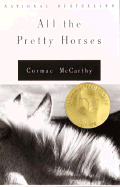
[Book Review] ALL THE PRETTY HORSES by Cormac McCarthy
 Fiction/Genre: Westerns
Doris Dixon reviews ALL THE PRETTY HORSES by Cormac McCarthy (Knopf, 1992):
As much as I love watching movies, I usually avoid films based on my favorite books. The film "Beloved" offers a good example of why I prefer to either read the book or watch the movie. Oprah Winfrey's production followed the Toni Morrison novel too closely. A movie that was its own artistic statement (that took more chances, asserted more liberties, made more leaps) would have been a far greater tribute to Morrison's masterpiece.
Having been captivated by the book, I vow never to watch the film "All The Pretty Horses." The novel tells the story of sixteen-year old John Grady Cole, a skilled horseman. Perhaps his talents would have been better appreciated in an earlier age. Now, three years after the end of World War II, highways and fences spoil the traditional terrain of the cowboy. When his grandfather dies and his mother, more interested in professional acting than ranching, sells the family land, John Grady and his friend Lacey Rawlins flee Southern Texas on horseback. They cross into Mexico at the Rio Grande. There they meet another Anglo teen on horseback. Jimmy Blevins is younger (perhaps only thirteen) and dangerous (his beautiful horse may be stolen). Against Rawlins' advice, John Grady allows Jimmy to join them.
As they ride, they notice an approaching thunderstorm. Having been struck by lightning before, Jimmy is terrified. He tries to outrun the storm, then dismounts, strips naked, and hides to avoid being struck again. His horse, clothes, and gun are washed away. Later, when the boys try to reclaim Jimmy’s horse and gun in a nearby village, the townsmen chase them through the countryside and the trio is separated. John Grady and Rawlins seek refuge at a vast estate. John Grady finds work there as horse trainer, Rawlins as a vaquero or cowboy. John Grady falls in love with the rancher’s daughter while his companion enjoys the company of the other workers. Their sanctuary and life as cowboys are ruined when Jimmy reappears.
I enjoyed this book for many reasons. It as an odyssey and a coming-of-age story. The hero, admirable because of his integrity, confronts cruelty and violence on his quest to live as cowboys did in the previous century. McCarthy’s language is both spare and lyrical, the dialogue in everyday English and Spanish. I found the setting engaging as well. Because of the intimate ways in which his characters interact with their surroundings, McCarthy’s vivid descriptions of the terrain were appealing even though I sometimes do not care for such elaborate details. McCarthy also lovingly depicts horses.
John Grady's story is the first volume of McCarthy’s Border Trilogy. Volume two is The Crossing. Cities of the Plain concludes the series.
Doris Dixon, Raleigh Branch Library
Read Kay Due's review of No Country For Old Men also by Cormac McCarthy.
Labels: Reviews by Doris Dixon
Wednesday, July 05, 2006
A PIECE OF CAKE by Cupcake Brown
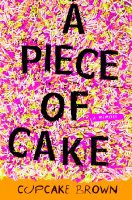 Doris Dixon reviews A PIECE OF CAKE: A Memoir by Cupcake Brown (Crown, 2006).
Don’t miss this fast-paced, inspiring memoir about recovery from addiction!
Cupcake never shies away from a fight. So if you know what’s good for you, you will never call her La'Vette. That is the name preferred by her biological father, Mr. Burns. She despises him.
Cupcake had thought that “Daddy” (Tim Long) was her father. Then Mr. Burns showed up after her mother’s death seeking custody of Cupcake and her brother. Since Daddy is not their legal guardian, the judge has no choice but to turn the siblings over to Mr. Burns. But he is only interested in their insurance settlement and leaves them with Diane, a brutal woman who hoodwinks caseworkers into believing that she is a loving foster mother.
Eleven-year-old Cupcake is beaten by Diane and raped by her nephew. She turns to alcohol and drugs to alleviate the pain. Over the years, she runs away often, hitchhiking, sleeping in parks, and turning tricks to survive. Each time the authorities eventually return her to Diane. Following one attempted escape, Cupcake lives with a family in South Central Los Angeles. There she gets involved with the Eight-Tray Gangster Crips. Despite their sometimes violent criminal behavior, the Gangsters offer Cupcake friendship and emotional support.
After getting hit in a drive-by shooting, Cupcake strikes a bargain with God. If she survives her injuries, she will give up gangbanging forever. God keeps His word and Cupcake eventually leaves the gang. But she remains alienated from God, blaming Him for her mother’s death and for not stopping Diane’s abuse.
With the help of Daddy and her mother's brother, Cupcake successfully petitions to be an emancipated adult. For the next decade, she continues to abuse drugs and alcohol; party; fight; sleep around; turn the occasional trick; and commit petty crimes. Her ability to land and keep a job (she always quits before being fired) convinces her that she is not a “dope fiend.” It is only after planning her own death (she tries to contract AIDS!) that Cupcake becomes desperate enough to seek God's help again. Through a difficult and painful recovery from alcohol and drug addiction, she finds faith, love, friendship and self-acceptance. She is now a successful attorney living in San Francisco.
Why you'll love it: A Piece of Cake is 1/3 urban "drama," 1/3 coming-of-age story, and 1/3 recovery memoir
Doris Dixon, Raleigh Branch Library
Labels: African-American Nonfiction, Reviews by Doris Dixon
Friday, June 23, 2006
DIGGING TO AMERICA by Anne Tyler
 Doris Dixon reviews DIGGING TO AMERICA by Anne Tyler (Knopf, 2006).
When does a foreign-born person stop being an outsider?
One afternoon at the Baltimore airport, two families--one white, the other Iranian American--wait for their newly adopted daughters to arrive from Korea. Soon afterward, Bitsy and Brad Donaldson and Sami and Ziba Kazdan meet for dinner. Over time, the lives of the two couples become intertwined as their extended families gather each year to celebrate "Arrival Day," the anniversary of their daughters' first day in America. But are the two families close? Sami's mother Maryam doubts it. Now a widow, Maryam joined her new husband in the United States years before the Iranian Revolution of 1979. She is very familiar with the customs and language, but still feels like a foreigner. She blames Americans like the Donaldsons with their unstated rules of etiquette and fascination with the exotic. With the help of an unlikely new suitor, Maryam learns that most people, even those born in the United States, feel like outsiders at one point or another. Anne Tyler's seventeenth novel will appeal to readers who enjoy thoughtful, character-driven stories.
Doris Dixon, Raleigh Branch Library
Labels: Mainstream Fiction, Reviews by Doris Dixon, Women's Fiction
Wednesday, June 07, 2006
CHANGING FACES by Kimberla Lawson Roby
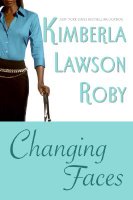 Doris Dixon reviews CHANGING FACES by Kimberla Lawson Roby (Morrow, 2006).
Whitney, Taylor, and Charisse have been best friends for years. They meet every Wednesday for lunch and call each other frequently. Their bond is threatened when Whitney can no longer tolerate Charisse's need to control EVERYTHING. When Charisse cruelly insults her for being overweight, Whitney decides to reveal one of her friend's darkest secrets. However, Whitney will have to wait in line. Charisse's husband Marvin, tired of being under his wife's thumb, has a few scores of his own to settle. How will the volatile and dangerous Charisse react to these threats?
Changing Faces is entertaining and engaging. We follow the trials and loves of Taylor and Whitney and wonder why they have tolerated Charisse for so long. Taylor is a successful attorney in line to become a partner at a prestigious Chicago law firm. She is troubled by a competitive co-worker who resents her success; painful menstrual cycles; and a long-time boyfriend who will not commit. Perhaps the most likeable character is Whitney, a customer-service manager. She also has difficulty in relationships, but is sure that all her problems come from being overweight.
I have not yet read Kimberla Lawson Roby's popular series of books about the notorious Rev. Curtis Black (Casting The First Stone, Too Much of A Good Thing, and The Best Kept Secret). How does the dangerous, hypocritical, bible-thumping Charisse compare to Curtis Black?
Doris Dixon, Raleigh Branch Library
Labels: African-American Fiction, Reviews by Doris Dixon
Thursday, May 25, 2006
MANHUNT by James L. Swanson
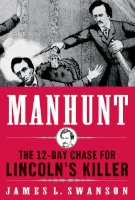 Who doesn't love a good page turner? I found one in an unlikely place: the new book by James L. Swanson, MANHUNT: THE 12-DAY HUNT FOR LINCOLN'S KILLER. It passed my "so-riveting-I-cannot-put-the-book-down-for any-reason" test.
The context of Abraham Lincoln's murder will be familiar to many readers. By April 1865, the defeat of the Confederacy was imminent. While many people were looking forward to peace, John Wilkes Booth was outraged. Booth deeply resented Lincoln even though the President's support for emancipation and black citizenship had evolved slowly.
Swanson allows readers to trail Booth as he prepares for the assassination; kills the President at Ford's Theatre; injures his leg in his famous leap onto the stage; flees the theatre on horseback; and makes his way out of the District of Columbia and into the Maryland countryside. We meet the men and women who aided Booth including such infamous "characters" as Mary Surratt and Dr. Samuel Mudd. Less well known is T. Jones, a Confederate scout and courier. He helped Booth and his companion David Herold avoid capture by hiding them in a pine thicket for several days and providing them with a boat and directions for crossing the Potomac River into Virginia. Booth and Herold made several mistakes as they inched deeper into the heart of the Confederacy. Ironically, they had to rely on a handful of African Americans for directions and transportation. Their last stop was the Garrett farm, the scene of their confrontation with manhunters from the U.S. Army.
MANHUNT may appeal more to casual readers than scholars. Still, there is much of interest in Swanson's crisp, fast-paced narrative. The author avoids any historical debates except to assert that Dr. Mudd was more closely linked to Booth than his defenders (and descendants) have claimed.
Fans of "police procedurals" will enjoy Swanson's retelling of the manhunt for Booth: the clues uncovered, the witnesses questioned, the rewards offered. One example is the story of how the cavalry unit that captured Booth initially galloped past their target.
For more information about MANHUNT, visit James L. Swanson's website.
For your consideration:
- Do you read more fiction or non-fiction? Why?
- What qualities make a non-fiction book a "good read"?
- Why do you enjoy "police procedurals? "True Crime" books?
Doris Dixon, Raleigh Branch Library
Labels: Nonfiction, Reviews by Doris Dixon
Thursday, May 18, 2006
ANYBODY OUT THERE? by Marian Keyes
 Doris Dixon reviews ANYBODY OUT THERE? by Marian Keyes (William Morrow, 2006)
WARNING: THIS REVIEW CONTAINS SPOILERS. In fact, most reviews of this book blow the surprise and I agonized over whether I should reveal what I wished I hadn't learned from those others...
Anna has survived a horrific taxi-cab accident and is recuperating with her family in Ireland. Things don't look good: broken arm, busted knee, nasty scars. And her family is wacko. She has four sisters, each with their own special "issues" including broken marriages, kooky careers, and recovery from assorted addictions. Mom is a bit theatrical. While caring for Anna, she assumes the mannerisms of her favorite soap opera nurses. With all of these personalities, who can blame Dad for staying in the background? Worst of all, Anna cannot get in touch with her husband Aidan back in New York City.
Frustrated by the unanswered e-mails and cell phone calls and only partially recovered, Anna returns home to track down her hubby. She finds an empty apartment and dozens of answering-machine messages from friends and loved ones. But no Aidan.
Here's the spoiler: Aidan died in the accident that left Anna so severely injured.
After weeks of denial, she finally faces the sad truth. However, instead of grief counseling Anna tries to contact Aidan through various spiritual mediums. She's convinced that he was planning to tell her something important the night of the accident.
It seems that many of the bestsellers in the Popular Library are plot-centered, quick reads. ANYBODY OUT THERE? is not one of those books. Its charm is in the description of all the crazy things that Anna goes through coming to terms with Aidan's death. We also learn how they met; meet their eccentric friends and neighbors; and follow Anna's career with a top PR firm specializing in cosmetics. Check out pages 61-64 for Anna's humorous speed-dating experiences.
Marian Keyes has gained a wide following with her funny novels about young women struggling with some of the rougher aspects of life including drug addiction and depression. Born in Ireland in 1963, Keyes admits to suffering from insecurity for most of her life. She began drinking at an early age and often made career decisions that reflected her insecurity. For example, she did not think that she was good enough to use her law degree professionally. She attempted suicide in 1994. Luckily, that low point was the impetus for Keyes to seek treatment for alcoholism. Although she had done some writing before her suicide attempt, after treatment she began writing more seriously. Her life improved with her marriage and the publication of her first novel Watermelon, both in 1995. Her subsequent novels have built on the success of the first.
Keyes' Walsh-sister novels include:
- 1995--Watermelon--After her husband abandons her--he thought it was best to wait until she gave birth--Claire Webster returns home to Dublin and her wacky family.
- 1998--Rachel's Holiday--Rachel Walsh lives in New York City. Her self-esteem is at an all time low. Her father insists that she return to Ireland and seek treatment for her drug addiction. Recovery involves confronting how she's hurt the family.
- 2002--Angels--Claire and Rachel's sister Maggie is separated from her cheating husband. She relocates to Los Angeles after losing her job. Working as an screenwriter's assistant, Maggie explores what it means to be a "bad girl."
You might also like IF YOU COULD SEE ME NOW by Cecelia Ahern.
Source for Biographical Information: "Marian Keyes." Newsmakers, Issue 2. Thomson Gale, 2006. Reproduced in Biography Resource Center. Farmington Hills, Mich.: Thomson Gale. 2006. Biography Resource Center is one of the Library's Online Databases. Call 415-2700 for login help.
Doris Dixon, Raleigh Branch Library
Labels: Reviews by Doris Dixon
Tuesday, May 09, 2006
PROMISE ME by Harlan Coben
 Doris Dixon reviews PROMISE ME by Harlan Coben (Dutton, 2006).
Aimee and Erin are careless. The two teens think nothing of having grabbed a ride with a drunk driver. One evening at a dinner party, Myron Bolitar overhears them recounting the incident. He's known Aimee's mother since junior high and is dating Erin's mom. Rembering a tragic drunk-driving accident in which a girl from his high school died, Myron extracts a promise from the two young women. If they are ever in a bind or stranded without a safe way home, they will call him, no matter what time, no questions asked.
A few days later, Aimee calls Myron at two a.m. He picks her up in Midtown Manhattan and drives her to a New Jersey suburb. Reminding him of his part of their agreement, she resists his questions. Aimee assures Myron that she will be safe at her friend Stacy's house. He leaves her there.
A short time later, Aimee disappears.
The last person to see Aimee, Myron has a hard time convincing the police and her parents that his connection to the case is legit. Aimee's mother extracts a promise from him--he must find her daughter.
This fast-paced, quick-read is thoroughly engaging. Myron, a sports and entertainment agent, is an intriguing character (more so than Kellerman's Alex Delaware, in my opinion). A knee injury sidetracked the NBA career of the former high-school All-American. A compassionate man, Myron "needs" to save people and is haunted by the rescues that failed. The thirty-something bachelor no longer lives with his parents; he's purchased the family home and they've retired to Boca Raton.
According to one reviewer:
"A combination of detective work, sports and humor is featured in [Harlan Coben's] early paperback originals about ... Bolitar. These books were well received, but as the series migrated to hardcover, the themes got darker and dealt less with sports. The character of Win [Windsor Horne Lockwood III], the psychotic sidekick, may be one of the more disturbing allies a detective has ever had, but his choice of morality lends depth to the themes chosen by Coben. Bolitar's office team includes Esperanza and Big Cyndi, two wonderful female characters, each with her own definite sense of self. Readers who enjoy Coben's work may also enjoy Simon Brett (Charlie Paris), Robert Crais, or Laura Lippman."
Gary Warren Niebuhr, Make Mine a Mystery: A Reader's Guide to Mystery and Detective Fiction (Libraries Unlimited, 2003), p. 104.
Promise Me is the 8th Myron Bolitar novel. Harlan Coben has written five bestselling stand-alone thrillers since Myron last tried to save someone in Darkest Fear (2000). The Innocent (2005), for example, was described as "the definitive Coben novel--one that fans and newcomers alike will devour. Don't make the mistake of not reading it!" (Library Journal).
I enjoyed Promise Me. The context in which the crime takes place--I don't want to give away too much--will resonate with many parents and young adults.
- Did you enjoy this novel?
- How do Myron and Win compare to some of your favorite investigating tag teams?
- What did you think about the promises made in this book--by Erin and Aimee, by Myron--and Coben's theme of "protecting the innocent"?
- I wish that Big Cyndi had not been described as she was. She sounded like a three-hundred pound, loud-color-wearing clown. Do you agree?
Doris Dixon, Raleigh Branch Library
Labels: Mystery, Reviews by Doris Dixon
Wednesday, May 03, 2006
WILD STARS SEEKING MIDNIGHT SUNS by J. California Cooper
 "WOMAN, BE WISE"
 WILD STARS SEEKING MIDNIGHT SUNS (Doubleday, 2006) is the latest collection of short stories from playwright, novelist, and short fiction writer J. California Cooper. Readers are invited to learn from the mistakes of a cross-section of women and men. In "As Time Goes By," Futila Ways invests her time in satisfying and keeping tabs on her lover. She thinks her sister is foolish for pursuing an education. "The Eye of the Beholder," the strongest story in the collection, follows Lily Bea's efforts at self-improvement. Believing her to be ugly, her mother arranges a loveless marriage to an old, skinflint dry cleaner. Lily Bea's beauty shines as she finally gains love and independence. Tashyah and Greg are both bored by their lives and material possessions in "Success" but neither knows how to sustain a meaningful relationship. "Just-Life Politics" is the funniest story. On his death bed, a miserly employer asks his maid to pray for him. Her response is hilarious.
Cooper encourages readers to extend themselves beyond the mundane into a larger, beautiful world full of opportunities. But, in order to enjoy all that the world offers, one must choose carefully how and with whom to invest time, energy, and love.
For your consideration:
The Random House Readers' Companion includes a biographical sketch. Its questions for book clubs are particularly good. I am "borrowing" question 2 for this post:
"Cooper has been praised throughout her career for her unique style. How would you define that narrative style? Do the narrators in each story adopt a common tone and/or speak from a common situation, or are there significant differences between her narrators? What are the strengths of this style, and what might be its shortcomings? Which characters do you feel tell their stories most effectively? Can you think of other writers who use the same kind of narrative device?"
The book's dust jacket includes the following words of praise:
“My fifth grade teacher, who has since become one of my friends, one day said, ‘Instead of calling and asking me for advice, try reading J. California Cooper.’”
—Halle Berry, from “Halle Berry’s Bookshelf” in O, The Oprah Magazine, on Some Love, Some Pain, Sometime
How useful is J. California Cooper's "advice"?
Labels: African-American Fiction, Reviews by Doris Dixon, Women's Fiction
Saturday, April 29, 2006
CHASING DESTINY by Eric Jerome Dickey
 SPEED. DRAMA. REVENGE.
Eric Jerome Dickey's latest has hit the shelves of the Popular Library. I hope you don't have to get up too early because CHASING DESTINY (Dutton, 2006) will keep you up all night.
Billie (aka "Ducati") lives on the edge. She likes fast motorcycles, hot clothes, and refuses to be tied down by a full-time gig. Keith is her soulmate, a man who is easy to be around. No stress. Lots of laughs and great sex. That is until (as you've probably guessed already) Billie learns that Keith is married and that she is pregnant. Keith is trying unsuccessfully to divorce his witch of a wife, Carmen. They have a fifteen-year-old daughter named Destiny who is confused by her fractured family life and enraged at her manipulative mother. Deceitful, impulsive, and bold, Destiny will remind you of Winter Santiago, the woman-child at the center of Sister Souljah's The Coldest Winter Ever. Destiny steals her mother's Jimmy Choo boots and sneaks out for a night out on the town. She hooks up with a dangerous crew, hits another girl with a brick, and becomes the unwitting star of the flick "Hoodrats Gone Wild." Destiny's acting out sets off a series of events that has dangerous repercussions for Billie, Keith and their unborn child.
For fast-reads with lots of romance, drama, and deceit, try authors Carl Weber and Mary B. Morrison.
Readers who appreciate Dickey's description of modern-day black Los Angeles (the hang-outs, the dances, the ambience) might like Walter Mosley's Easy Rawlins series of mysteries.
For your consideration:
Originally from Memphis, Eric Jerome Dickey is an ambitious writer. He tries to accomplish much in 416 pages: tell a fast-paced story involving love, jealousy, conflict and deceit; stage numerous confrontations; illuminate the trials of biracial and multi-racial people; introduce a new comic book character ("Black Panther"); recommend some classic Science Fiction titles....
How well does he pull it off?
Labels: African-American Fiction, Reviews by Doris Dixon
MY LIFE IN FRANCE by Julia Child and Alex Prud'homme
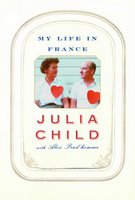 Julia Child and Alex Prud'homme, MY LIFE IN FRANCE (Knopf, 2006).
If you think that Julia Child (1912-2004) was a stuffy, funny-talking old lady, think again.
Many of us struggle to find our calling in life. Julia Child found hers while living in Paris in the 1940s and 50s. She knew little about the culture and her high-school French was limited. Her husband Paul was an excellent tour guide though. He had lived in France before, knew the language, and escorted his wife to many sites and restaurants. Wanting to explore the culture and cuisine independently, Julia took language lessons. She also began to cook more (raised in an upper-middle class family in Pasadena, California, Julia had never been encouraged to do much cooking). She learned about ingredients by exploring local markets and talking extensively with vendors and enrolled in Le Cordon Bleu, the famous cooking school, in 1949. Despite conflicts with the school's owner, a woman more concerned with the bottom line than with training master chefs, something clicked for Julia--she had found her calling:
"I had always been content to live a butterfly life of fun, with hardly a care in the world. But at Cordon Bleu, and in the markets and restaurants of Paris, I suddenly discovered that cooking was a rich and layered and endlessly fascinating subject. The best way to describe it is to say that I fell in love with French food--the tastes, the processes, the history, the endless variations, the rigorous discipline, the creativity, the wonderful people, the equipment, the rituals" (p. 63).
My Life in France will appeal to those who enjoy cooking narratives and travel writing--A Year in The World by Frances Mayes is a recent example. I loved the black and white photographs taken by Paul Child and how they were arranged throughout the text and not in a middle-of-the-book gallery.
This book will also appeal to some fans of biography. It reads like a series of postcards or vignettes. Child details the beginning of her career as a world-renowned chef, television host and author--how she analyzed, studied, practiced, taught and wrote about French cooking. The book's tone (light, descriptive, not overly analytical, not delving too deeply into the darker sides of the author's life and personality) reminded me of the first volume of Langston Hughes' autobiography, The Big Sea.
At the beginning of this review, I suggested that this book might help you to see Child in a new light. Not knowing much about her, I appreciated her efforts to explode stereotypes about French people. She found them to be delightful, friendly, and helpful, in contrast to the views of some of her family and friends.
Also of interest:
Julia Child: Lessons with Master Chefs: A PBS series
Can you recommend any other cooking memoirs?
Doris Dixon, Raleigh Branch Library
Labels: Cooking, Memoir, Reviews by Doris Dixon
Thursday, April 27, 2006
DON'T LOOK DOWN by Jennifer Crusie and Bob Mayer
 Jennifer Crusie and Bob Mayer, DON'T LOOK DOWN (St. Martin's Press, 2006).
TRY A ROMANCE WITH A KICK!
Lucy Armstrong has a mess on her hands. A director of dog food commercials, Lucy has been asked to wrap up shooting on a dog-of-a-movie entitled "Don't Look Down." Half of the crew--including the original director--abandoned the project in disgust. The film had been a romantic comedy before being hijacked by an investor, a former IRA terrorist, looking for a way to launder money. He adds a kidnapping and helicopter rescue to the ending--a scenario that Lucy fears will endanger her remaining cast and crew.
The final scene turns out to be a front for another crime. The terrorist will use the chopper to deliver stolen jade aphrodisiacs to a Russian crime boss. Hoping to nab both men, the CIA recruits Army Special Ops officer J.T. Walsh to work undercover on the film as a stunt man. J.T. is the kind of man a woman can rely on--strong, brave, loyal, and trustworthy. And Lucy needs all the help she can get dealing with
- the final, dangerous stunt
- temperamental actors more concerned about stardom than safety
- her ex-husband, the film's stunt coordinator, who is in cahoots with the terrorist
- her depressed sister, who works as the make-up artist and has developed some nasty habits
- and her precocious, always-underfoot, five-year-old niece.
The website for the Crusie-Mayer collaboration features author bios and a blog.
Jennifer Crusie's books feature gutsy, imperfect heroines who know how to "take care of business." Janet Evanovich's Stephanie Plum mysteries are similar.
Labels: Reviews by Doris Dixon
Tuesday, April 25, 2006
GONE by Jonathan Kellerman
 Jonathan Kellerman, GONE: An Alex Delaware Novel (Ballantine Books, 2006).
In Gone, his 20th Alex Delaware novel, Jonathan Kellerman snatches your attention and holds it hostage until the last sentence.
Coaxed by her boyfriend and fellow actor Dylan Meserve, Michaela Brand stages her own kidnapping to garner attention for her fledgling career. The hoax is uncovered and the actors prosecuted. Michaela's public defender refers her to psychologist Alex Delaware for evaluation. When the actress later turns up dead, Delaware teams up once again with homicide detective Milo Sturgis to solve the crime. Their investigation leads them to the bizarre "school" where Michaela and Dylan studied their craft. Was Michaela murdered by her boyfriend, their wealthy and neurotic acting coach, or the school's janitor, a convicted Peeping Tom?
Links:
Jonathan Kellerman
You might also enjoy works by Stephen White. His protagonist is Dr. Alan Gregory, a clinical psychologist from Boulder, Colorado.
Psycho Killer Booklist from Overbooked.org
Psychological Suspense Crime Fiction Booklist from Overbooked.org
For you consideration:
I was engrossed by this mystery. It was suspenseful, but didn't seem like much of a "psychological thriller." Kellerman fans, do you agree? What defines a good psycho-thriller?
Labels: Mystery, Reviews by Doris Dixon
Thursday, April 13, 2006
ORBIT by John J. Nance
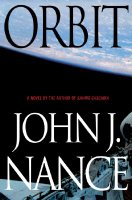 John J. Nance, ORBIT (Simon & Schuster, 2006).
One man's dream of space travel turns into a nightmare in John J. Nance's new adventure novel.
The year is 2009 and Kip Dawson is the luckiest man on Earth. He has won a ticket for a ride into space on a privately-owned spacecraft. Choosing to ignore the misgivings of his wife, Kip boards the Intrepid for a six-hour expedition orbiting the Earth at a relatively low altitude. Even though he is not going into what we might consider "outer space," the voyage is still risky. For one thing, the administrator of NASA opposes private space missions and has vowed not to mount a rescue if anything goes wrong.
Right before take-off, the other passengers, who purchased their million-dollar tickets, are unable to go. That leaves Kip and the astronaut, Bill Campbell. They make it into low orbit with no problems. Then a small rock blasts through the Intrepid, killing Bill Campbell and disabling all lines of communication between the ship and mission control. Kip Dawson must now take control of the vessel and figure out how to return to Earth before his available supply of oxygen runs out.
Adventure lovers should definitely check this one out! John J. Nance places you in the cockpit of the Intrepid detailing the maneuvers that novice pilot Kip Dawson must master if he hopes to survive. Kip must also get a handle on his wide-ranging emotions: terror, guilt, panic, fear, resignation and hope.
What books/authors have you read that describe a character going through a harrowing life-or-death test of skill and stamina?
The political intrigue that occurs "on the ground" reminded me of author Vince Flynn's work.
Doris Dixon, Raleigh Branch Library
Labels: Reviews by Doris Dixon


